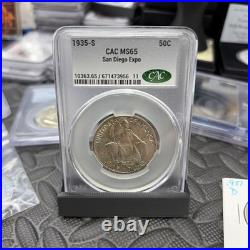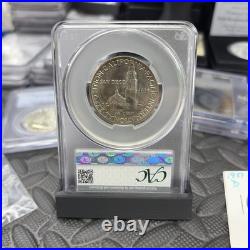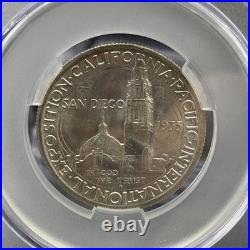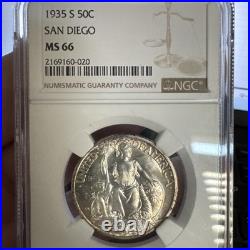
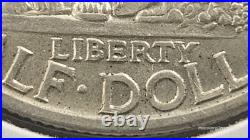
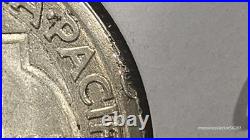
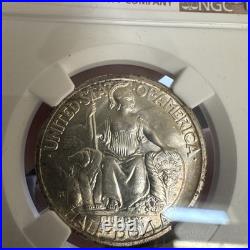
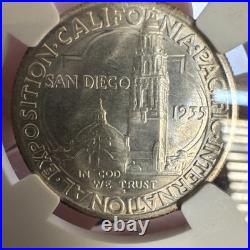
1935-S San Diego Commemorative NGC MS 66

1935-S-San-Diego-Commemorative-NGC-MS-66-01-vy
1935-S San Diego Commemorative NGC MS 66

1935-S San Diego Commemorative NGC MS 66
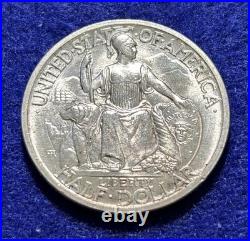
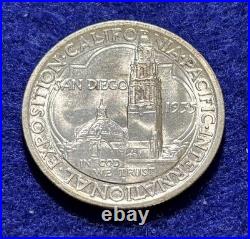
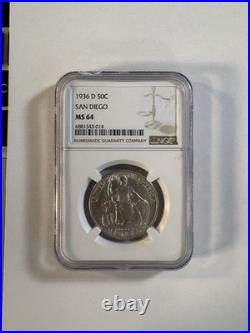
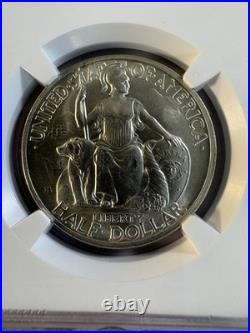
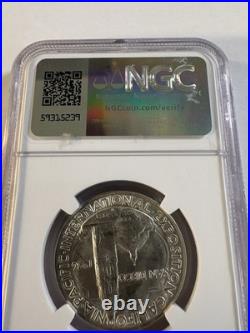
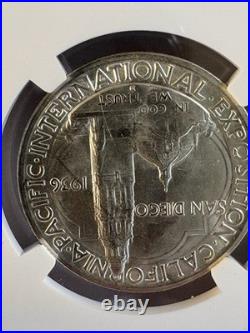
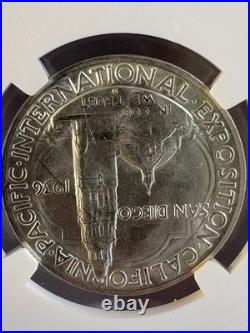
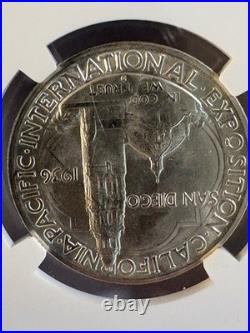
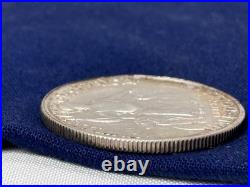
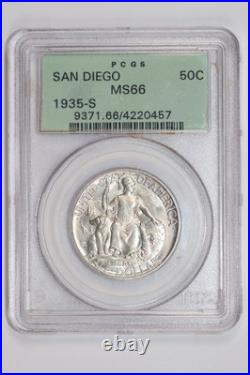
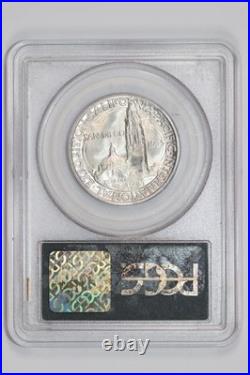
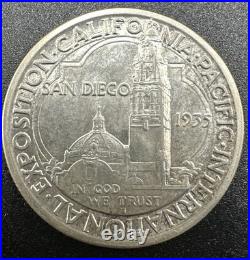
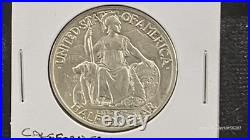
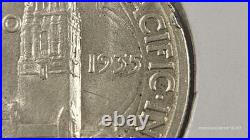
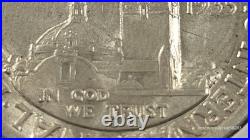
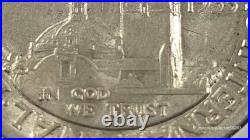
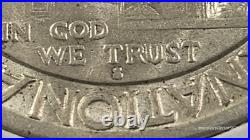
The 1935-S San Diego Commemorative NGC MS 66 is a valuable silver coin minted in San Francisco in 1935. This coin holds historical significance as a commemorative piece, celebrating a specific event or anniversary. Graded as MS 66 by NGC, it is in uncirculated condition, making it a highly sought-after coin among collectors. With a fineness of 0.9 and a denomination of 50 cents, this piece is a rare and prized addition to any coin collection.
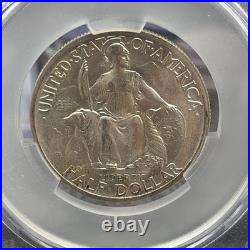
1935-S San Diego Commemorative NGC MS 66

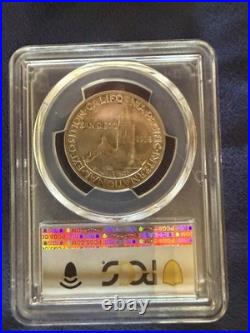
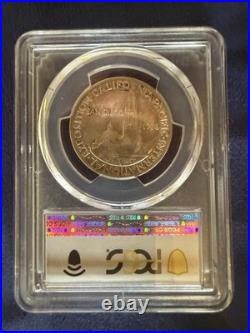
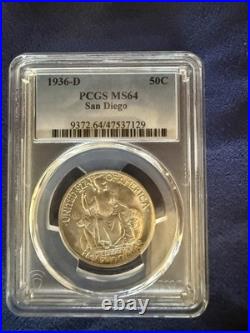
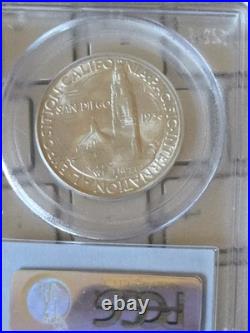
1936-D 50c San Diego Commemorative Silver Half Dollar PCGS MS 65

1936-D-50c-San-Diego-Commemorative-Silver-Half-Dollar-PCGS-MS-65-01-mg
1936-D 50c San Diego Commemorative Silver Half Dollar PCGS MS 65

1936-D 50c San Diego Commemorative Silver Half Dollar PCGS MS 65
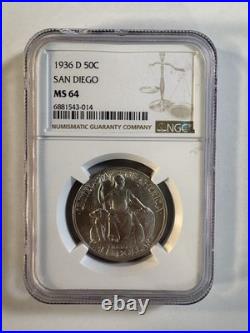
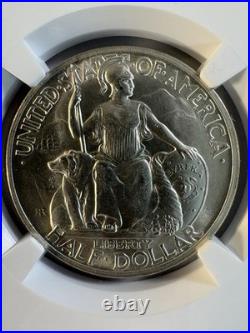
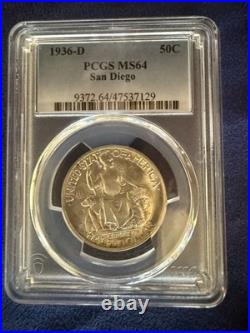
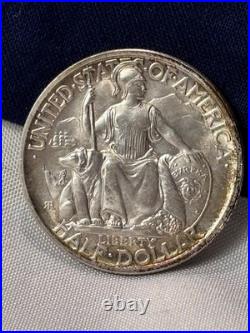
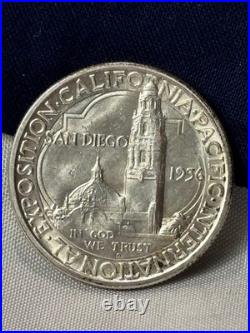
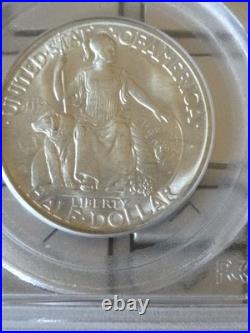
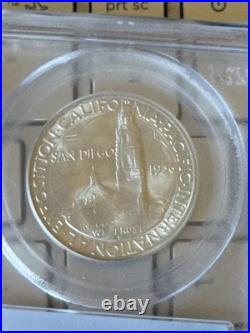
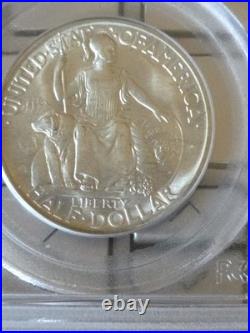
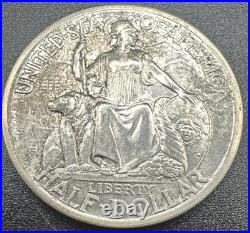
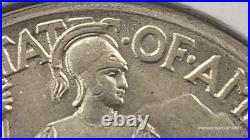
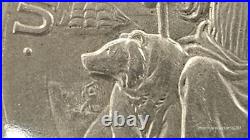
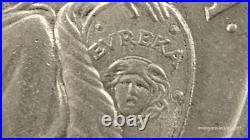
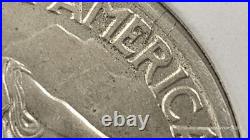
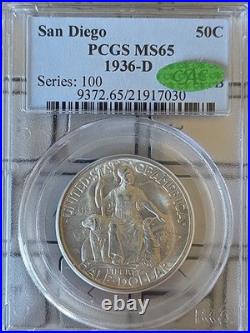
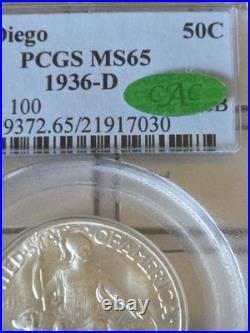
PLEASE FOLLOW OUR E BAY STORE. PLEASE READ WHOLE ADD. We want your repeat business. We get by having best prices on the net. PCGS M65 CAC 1936 DENVER SAN DIEGO HALF DOLLAR COMMEMORATIVE. This is a Brilliant White Coin Graded PCGS CAC 65 by the Best Grading company in the world. California Pacific International Exposition half dollar. 50 cents 0.50 US dollars. 30.61 mm (1.20 in). 2.15 mm (0.08 in). 1935-S: 250,132 including 132 pieces for the Assay Commission. 180,000 melted 1936-D: 180,092 including 92 assay coins, 150,000 melted. (all 1935 coins), D. Beneath the letter T beginning. And other elements of the Seal of California. California Tower and Chapel of St. The California Pacific International Exposition half dollar, sometimes called the California Pacific half dollar or the San Diego half dollar, is a commemorative. Struck by the United States Bureau of the Mint. In 1935 and 1936. The reverse shows buildings from the California Pacific International Exposition. Legislation for the half dollar moved through Congress without opposition in early 1935, and Aitken was hired to design it. Once his creation was approved, the San Francisco Mint. Produced 250,000 coins, but expected sales did not materialize. Left with more than 180,000 pieces they could not sell, the Exposition Commission went back to Congress for further legislation so it could return the unsold pieces and have new coins, dated 1936, hoping for greater sales in the second year of the fair’s run. The coins, of either date, sell in the low hundreds of dollars today. The California Pacific International Exposition. Was a world’s fair. Held in San Diego’s Balboa Park. The fair attracted some 3.75 million visitors during its two-year run. At that time, commemorative coins. In the case of the California Pacific Exposition half dollar, it was the California Pacific International Exposition Co. Three-cent stamp issued by the United States Post Office Department. For the Exposition, 1935. California’s George Burnham. Introduced a bill for a California Pacific Exposition half dollar into the House of Representatives on February 19, 1935. It was referred to the Committee on Coinage, Weights, and Measures. Of Missouri, acting chairman of that committee, reported back to the House on April 12 with the recommendation that it pass after small technical amendments were made. The bill called for the issuance of a maximum of 250,000 half dollars. Cochran noted that Congressman Burnham had appeared before the committee, representing that there would be no expense to the government, and sent a letter so stating (reproduced in the report). Burnham had also written that the Exposition had considerable participation by the federal government, and its officials expected seven to ten million people to attend. The following day, Cochran had the bill considered by the House, which passed the recommended amendment and then the bill itself without any debate. The Senate received the bill on April 15, and referred it to the Banking and Currency Committee. On April 23, the committee, through its chairman, Duncan U. Of Florida, recommended that the bill pass, with a report similar to that of the House. On April 26, the bill passed the Senate on Fletcher’s motion without any discussion or dissent. Signed it on May 3, 1935. California Senator William G. Former Secretary of the Treasury under Woodrow Wilson. Wrote to the incumbent Treasury Secretary, Henry Morgenthau. Proposing that the late president appear on the half dollar; Morgenthau wrote back calling the idea “interesting” and suggested it be directed to the Exposition Commission, which was responsible for securing designs. The January 1935 issue of The Numismatist. The journal of the American Numismatic Association. , which went to press before the congressional actions, reported that there were plans for 50,000 silver dollar and 150,000 half dollar coins depicting President Roosevelt. State Seal of California. Was hired to design the California Pacific half dollar. He submitted plaster models to the Commission of Fine Arts. Charged by a 1921 executive order by President Warren G. With making recommendations regarding public artworks, including coins. Commission sculptor-member Lee Lawrie. Took the lead in examining the models, and they were approved on July 5, 1935, though Lawrie questioned the legality of having coins omitting the mottoes. Of New York for reduction to coin-sized hubs. Which were then sent to the Philadelphia Mint. Where the working dies were made. Aitken’s obverse shows elements of the California State Seal. With a seated depiction of Minerva. She wears a helmet and holds a staff with her right hand, her left rests on a shield with. On the shield is an aegis. With the head of Medusa. Affixed; between goddess and shield is a cornucopia. Overflowing with produce, symbolic of California’s vast resources. Is to the left of Minerva. The name of the issuing country and the denomination surround the central design, with. The reverse shows two buildings constructed for the Exposition, and part of the California State Buildings at the fair, the California Tower and Chapel of St. Francis today the Museum of Us. The outline which surrounds the buildings is said to suggest Spanish Mission architecture. But Anthony Swiatek and Walter Breen. In their book on commemorative coins, identify it as a tressure. Found on a some medieval gold coins. The name of the exposition surrounds the design, with the date. IN GOD WE TRUST. Under which the mint mark. The California Tower and Chapel of St. Numismatic author Don Taxay. Called the half dollar “a very distinguished coin artistically”. And said of its reverse, I cannot think of another architectural motif that has been treated so successfully on a United States coin. Art historian Cornelius Vermeule. Liked the California Pacific half dollar, deeming the Minerva “one of the most powerful uses of the facing figure in American numismatic art”. He deemed Aitken’s design influenced by the pediments and other works he had sculpted during the 1920s and 1930s, including the pediment for the United States Supreme Court Building. He felt the depiction of the buildings on the reverse was “good enough for what it pretends to show”, and noted that the monogrammatic style of the artist’s initials was imitated by Gilroy Roberts. When signing his obverse of the Kennedy half dollar. Vermeule noted that the lettering “confirms the strength and balance of the total visual experience”. Production, distribution, and collecting. 250,132 coins were minted in San Francisco in August 1935. 132 were sent to Philadelphia and held for inspection and testing at the 1936 meeting of the Assay Commission. The 250,000 remaining coins were sent from San Francisco to the Bank of America. Although commemorative coin collecting (and investing) was becoming popular in 1935, the mintage of a quarter million coins, far in excess of some other issues of the era, meant investors were indifferent to the California Pacific issue. With sales of the 1935-S. Half dollar coming to a standstill, the Exposition Commission was well aware of this problem. Thus, they sought relief from Congress in the form of an act allowing them to return unsold half dollars for new ones, dated 1936. Coin collectors would view this as a new variety. At about this time [late 1935], commemorative coin collectors throughout the nation became coinage-figure conscious. Coinage figures for a while determined retail values. Large authorizations meant a tremendous floating supply of coins, which would have little value to the commemorative coin collector or to his new companion, the commemorative coin speculator. Accordingly, on January 6, 1936, Congressman Burnham introduced legislation to accomplish this. On February 17, the committee reported back through New York’s Andrew Somers. When Burnham brought the matter to the House floor on March 16, Michigan’s Jesse Wolcott. He explained that the coins had been received so late in the year there had not been time to sell many. There were no further questions, and the bill passed the House without objection. The Senate committee reported on April 17, adding provisions requiring that the coins be dated 1936, regardless of when struck, and that they be produced at only one mint, chosen by the Director of the Mint, in line with other commemorative coin bills that committee had been reporting. Early numismatic author David M. Bullowa noted these provisions, designed to prevent the creation of varieties, were thus inserted in a bill that itself created a new variety. The Senate considered the bill on April 24, and it was amended and passed without debate or opposition. President Roosevelt signed the bill on May 6. Chairman of the Exposition Commission, wrote to Acting Director of the Mint Mary M. On May 16, 1936, asking that the coins which were to be struck at the Denver Mint. And bear its mint mark “D” be minted as quickly as possible, as heavy attendance was expected at the fair around Memorial Day. At the end of May. The production at the Denver Mint made the California Pacific half dollar the first commemorative to be struck at San Francisco and at Denver, but not at Philadelphia. It is the only pre-1954 commemorative with that distinction. Advertisement for the half dollars, 1937. There was a spike in prices for many commemorative coins in 1936. On January 27, 1937, Davidson wrote to the Director of the Mint, Nellie Tayloe Ross. Swiatek, in his 2012 volume on commemoratives, said the price increase was to create the appearance of demand and future rarity. This didn’t work. Large hoards of both dates were held by insiders for decades, including one holding of 31,050 of the 1935-S, amounting to nearly half the extant mintage. These were gradually dispersed from the 1960s to the 1980s. The edition of the Red Book A Guide Book of United States Coins. PLEASE SEE STORE WW1- WW2 MEDALS -STERLING SILVER BADGES – RARE COINS PCGS GRADED /RARE GRADED CURRENCY.
1936-D 50c San Diego Commemorative Silver Half Dollar PCGS MS 65

1935 S San Diego Commemorative Half Dollar

1935-S-San-Diego-Commemorative-Half-Dollar-01-wj
1935 S San Diego Commemorative Half Dollar

1935 S San Diego Commemorative Half Dollar
The 1935 S San Diego Commemorative Half Dollar is a valuable and collectible coin made of 90% silver. Minted in San Francisco to commemorate the opening of the San Diego Exhibition, this uncirculated coin features intricate designs and craftsmanship. With a business strike type and a denomination of 50 cents, this piece of American history is a prized possession for numismatists and collectors alike.
1935 S San Diego Commemorative Half Dollar

Rare 1935-S San Diego California-Pacific Exposition Half Dollar XF/AU 90% Silver

Rare-1935-S-San-Diego-California-Pacific-Exposition-Half-Dollar-XF-AU-90-Silver-01-coyn
Rare 1935-S San Diego California-Pacific Exposition Half Dollar XF/AU 90% Silver

Rare 1935-S San Diego California-Pacific Exposition Half Dollar XF/AU 90% Silver
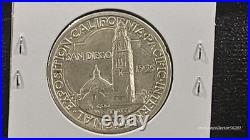
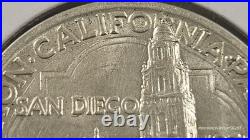
Rare 1935-S San Diego California-Pacific Exposition Half Dollar (XF/AU) This is a beautiful example of the 1935-S California-Pacific International Exposition Half Dollar, struck at the San Francisco Mint. Designed by Robert Aitken, this commemorative coin celebrates the San Diego fair and features some of the most intricate artistry found on U. Condition: XF/AU (Extremely Fine / About Uncirculated) Detailed Description Obverse: Features a seated figure of Minerva (the Roman goddess of wisdom) with a shield and a grizzly bear by her side-a nod to the California state seal. The luster is still present, with sharp details on the spear and shield. Reverse: Depicts the iconic Chapel of St. Francis and the California Tower from the exposition grounds (Balboa Park). The architecture remains crisp with minimal wear on the high points of the buildings. Overall Eye Appeal: This coin has a wonderful original patina. It bridges the gap between a high-grade circulated coin and a low-end uncirculated piece, making it a perfect addition for a commemorative type set collector who wants beauty.
Rare 1935-S San Diego California-Pacific Exposition Half Dollar XF/AU 90% Silver

San Diego Commemorative Half Dollar 1935 S MS 65 PCGS SKUI18938

San-Diego-Commemorative-Half-Dollar-1935-S-MS-65-PCGS-SKUI18938-01-ny
San Diego Commemorative Half Dollar 1935 S MS 65 PCGS SKUI18938

San Diego Commemorative Half Dollar 1935 S MS 65 PCGS SKUI18938
San Diego Commemorative Half Dollar 1935 S MS 65 PCGS SKU:I18938. A genuine 1935 S San Diego California Pacific International Exposition Commemorative Silver Half Dollar Coin, graded and certified MS 65 by PCGS. This 90% silver coin is one of America’s most beautiful classic commemorative coins. Known as the “San Diego half dollar, ” it was issued to mark the California-Pacific International Exposition. The obverse depicts a seated Minerva with a spear and shield inscribed EUREKA. The reverse shows the exposition’s State of California building and observation tower. Most of the coins struck were melted down by the mint. Less than 30% of the 1935 San Francisco Mint issues were distributed. While fewer than 20% of the 1936 Denver Mint issues survived. The images you see are for the exact item you will receive.
San Diego Commemorative Half Dollar 1935 S MS 65 PCGS SKUI18938

1935-S San Diego Commemorative Uncirculated 70,132 Mintage Free Shipping

1935-S-San-Diego-Commemorative-Uncirculated-70-132-Mintage-Free-Shipping-01-jmya
1935-S San Diego Commemorative Uncirculated 70,132 Mintage Free Shipping

1935-S San Diego Commemorative Uncirculated 70,132 Mintage Free Shipping
We’re constantly adding new notes and coins each week. Please be assured we are strongly committed to superior quality unparalleled customer service, and strive to make a customer for life. We hope that you will come again. We sell US Series Collector Coins, US Type, World Coin, World and US Currency, Silver, Gold, and occasionally other collectibles. Oceanside Coin & Currency was recently established. I normally don’t do this but will under certain circumstances. GUARANTEE: Unless stated otherwise, all items are unconditionally guaranteed to be genuine and as described. If coins or currency are certified by a 3rd party grading service, then their standards apply.
1935-S San Diego Commemorative Uncirculated 70,132 Mintage Free Shipping

San Diego Commemorative Silver Half Dollar 1935-S MS66 NGC

San-Diego-Commemorative-Silver-Half-Dollar-1935-S-MS66-NGC-01-ebfk
San Diego Commemorative Silver Half Dollar 1935-S MS66 NGC

San Diego Commemorative Silver Half Dollar 1935-S MS66 NGC
Certified coins: All of our certified coin photos are considered stock photos unless otherwise noted. Though we do our best to update photos with current inventory, stock photos are necessary due to inventory turnover and having multiples of the same item in stock. We welcome inquiries to see if the exact coin pictured is in stock. In many cases, if it is not, we will post new photos of a current coin in inventory upon request. Roll pictures are stock photo examples. GSP orders are not eligible for return. Please include with the return a description of why you are dissatisfied, as well as the listing information. Failure to include this information may delay processing your return. L & C Enterprises, Dept E. 11061 Winners Circle Los Alamitos, CA 90720.
San Diego Commemorative Silver Half Dollar 1935-S MS66 NGC